The President’s FY27 Budget Request
The President's FY27 budget proposal suggests significant restructuring of disability services, focusing on consolidating programs while cutting funding for specific developmental disability initiatives. It proposes eliminating the Administration for Community Living (ACL) and key programs like University Centers for Excellence in Developmental Disabilities (UCEDDs), while funding for Independent Living Centers and some special education grants.

Key Funding Proposals:
Program eliminations & Cuts: The budget proposes zeroing out funding for Developmental Disabilities Projects of National Significance, UCEDDs, and Voting Access for Individuals with disabilities. It also targets cuts for autism and other Developmental Disability programs, along with reductions in funding for Leadership Education in Neurodevelopmental and Other Related Disabilities (LEND) programs.

Special Education Increases: The proposal includes a notable increase for the IDEA grants to states, raising them from $14.2 billion to $15.4 billion, and a boost for IDEA Part C for Infants, Toddlers, and Families to $590 million.

Restructuring Disability Services: Many functions of the ACL would be absorbed into the US Department of Health and Human Services' Administration for Children, Families, and Communities.
Independent Living Boost: An additional $100 million is proposed for the Centers for Independent Living.
Research Reductions: Funding for the Eunice Kennedy Shriver National Institute of Child Health and Development (NICHD), which oversees Intellectual and Developmental Disabilities Research Centers (IDDRCs), face cuts, potentially limiting developmental research.

These proposed changes reflect an approach to "streamlining services", allowing states more discretion in distributing funds, yet they risk eliminating specialized, legally authorized program for individuals with disabilities.

Analysis of this budget request is ongoing. I will continue to update as information rolls in.

What Inclusive Community Means
Inclusion is more than a word; it's a daily practice.

We believe inclusive community means that people with disabilities are not just present; they are valued, employed, heard, supported, and connected.

Inclusion looks like a job coach helping someone succeed at work. It looks like families navigating services together instead of alone. It looks like adults gaining digital literacy skills so they can connect, apply for jobs, and advocate for themselves.

Inclusive community means access.

Access to transportation.

Access to meaningful employment.

Access to education.

Access to civic participation.

When those doors are open, independence grows.

We partner with families, schools, employers, and local leaders because real inclusion is built locally. Every job placement, every advocacy action, and every skill gained strengthens our entire region.

 Inclusion is not charity. It is community strength.
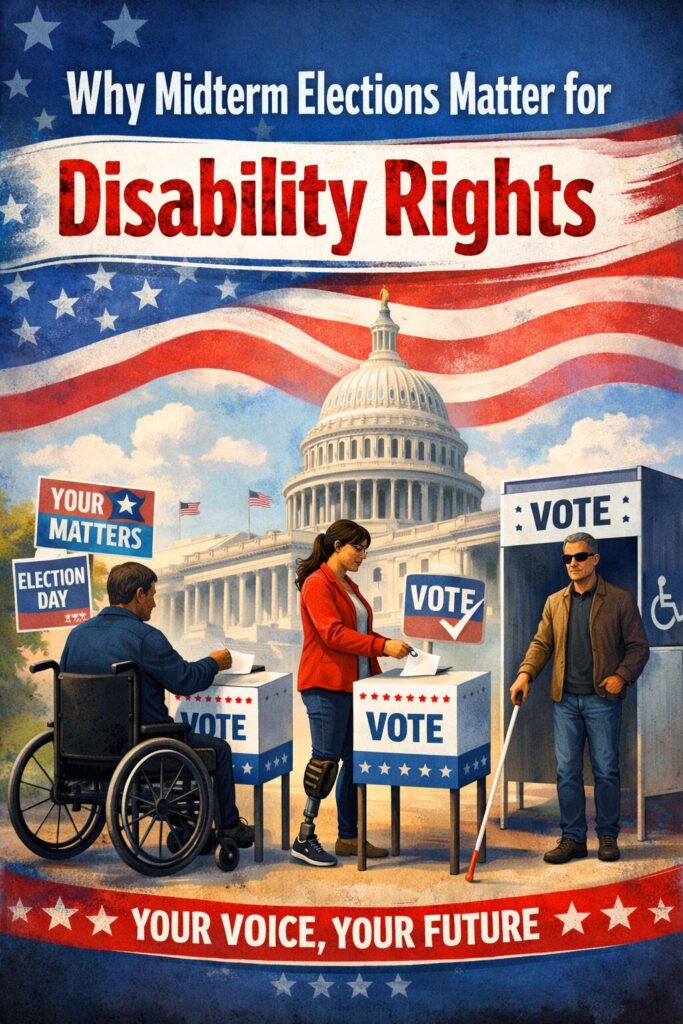
Why Midterm Elections Matter for Disability Rights
Every two years, voters head to the polls for midterm elections. Midterm elections may not generate the same attention as presidential races; however, their impact on disability rights is immediate and real. It impacts funding and community inclusion in significant ways.

Every two years, voters choose members of Congress and state leaders who make decisions about Medicaid, supported employment, education funding, housing supports, and community services. These programs shape daily life for individuals with disabilities and their families across York, Chester, and Lancaster counties.

Midterms Decide Who Controls Funding

Congress controls federal spending, where your tax dollars are spent. Midterms can shift committee leadership and funding priorities. That means decisions about budget levels, waiver programs, workforce supports, and accessibility protections are directly influenced by who is elected. Disability services are not automatic; they depend on informed lawmakers and sustained advocacy. Many of the services that individuals rely on every day are funded through annual appropriations or long term federal authorizations.

The changes in committee can shift influence how much funding programs receive; whether protections are strengthened or weakened, and which issues are prioritized. This is why we have to pay attention and continue to advocate for ourselves and our children.

State and Local Elections Matter Just as Much

State and local races also matter. Governors, state legislators, and local officials influence how federal funds are administered, how schools operate, and how inclusive our communities become. These offices shape how federal disability dollars are administered at the state level. They oversee Medicaid waivers, workforce development programs, and special education policies.

Local officials may influence school board policies, county transportation systems, and community development planning. Inclusive infrastructure, accessible public spaces, and equitable workforce initiatives often begin with local leadership. In other words, midterms are not abstract. They affect daily life.

Disability Rights are Civil Rights

Disability rights are civil rights. Progress has always required civic participation; voting, organizing, and speaking up. The movement has always been rooted in civic participation. From the passage of the Americans with Disabilities Act to ongoing fights for community based services, progress has come because people organized, voted, and held elected officials accountable. When voter turn out is low, communities that rely on public services are often the most affected. When turnout is strong, policymakers pay attention.

Midterm elections are an opportunity to reinforce the disability rights are civil rights, and that accessibility, dignity, and inclusion are non-negotiable values.

 What is at Stake

In recent years, conversations around Medicaid funding, direct support workforce shortages, accessible housing, and inclusive employment have intensified. Decisions about budget caps, reimbursement rates, and eligibility rules can either expand opportunity or restrict access. For families navigating services, small policy shifts can mean longer waitlists, fewer supports, and reduced stability. For individuals seeking employments or independence, funding decision can determine whether opportunities exist.

Midterms shape the environment in which those decisions are made.

 We are Non-Partisan

The Arc of the Piedmont Tri-County is nonpartisan; our focus is dignity, independence, and opportunity. We encourage informed engagement in every election cycle because policy decisions affect real lives.

Make a plan to vote. Stay informed. Join us here to receive updates and ways to take action.

Every election matters. 🗳️